Cross-Border Handover: The Last 100 Meters in Sapporo
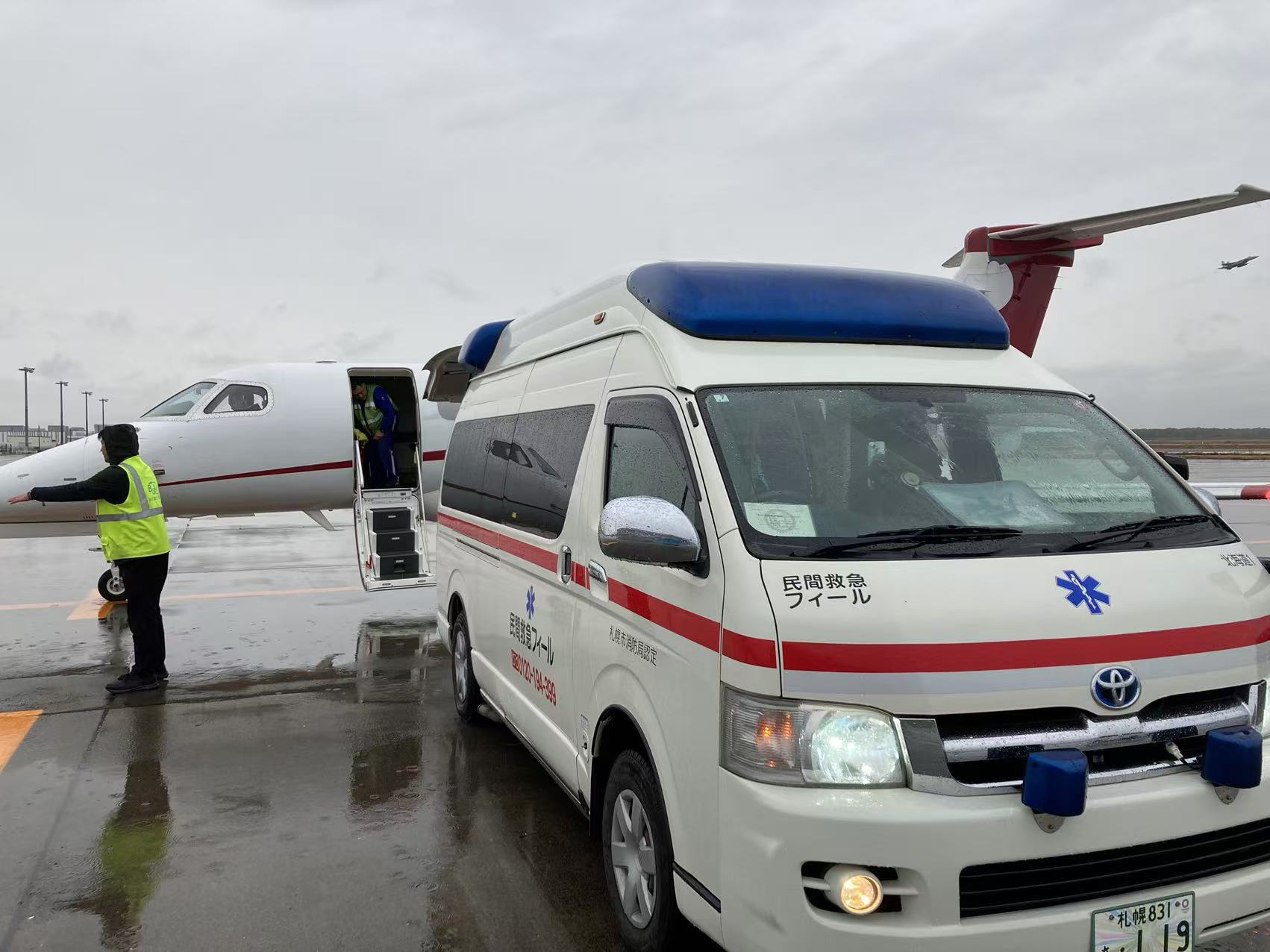
The success of a cross-border transfer often hinges on the 'last 100 meters' overseas — after landing, can the patient be handed smoothly to local ground emergency services? Below is a Japan-bound handover record.
1. Locking overseas ground resources in advance
Before departure, the coordination team confirmed arrival time, vehicle certification and crew with a licensed Japanese emergency transport provider. The ambulance in the photo is a Sapporo Fire Bureau certified private emergency vehicle; a direct aircraft-to-vehicle link minimizes the patient's exposure outdoors.
2. Handover on a rainy apron
It rained on the day of this mission. The team pre-confirmed door-opening sequence, stretcher rain protection and equipment packing with the crew, while ground guides handled apron safety. A wet handover roughly doubles the confirmation items — one oversight can mean wet equipment or a chilled patient.
3. Language and institutional interfaces
Cross-border tasks also involve language, medical document alignment between two systems, and entry formalities. These 'soft' tasks never appear in photos, yet they decide whether the handover completes in one pass.
BOOZOUN's view:
The hard part of cross-border transfer is not the flight segment but the ground links at both ends. Lock overseas resources early and rehearse the handover to the detail — that is the core of the coordinator's craft.
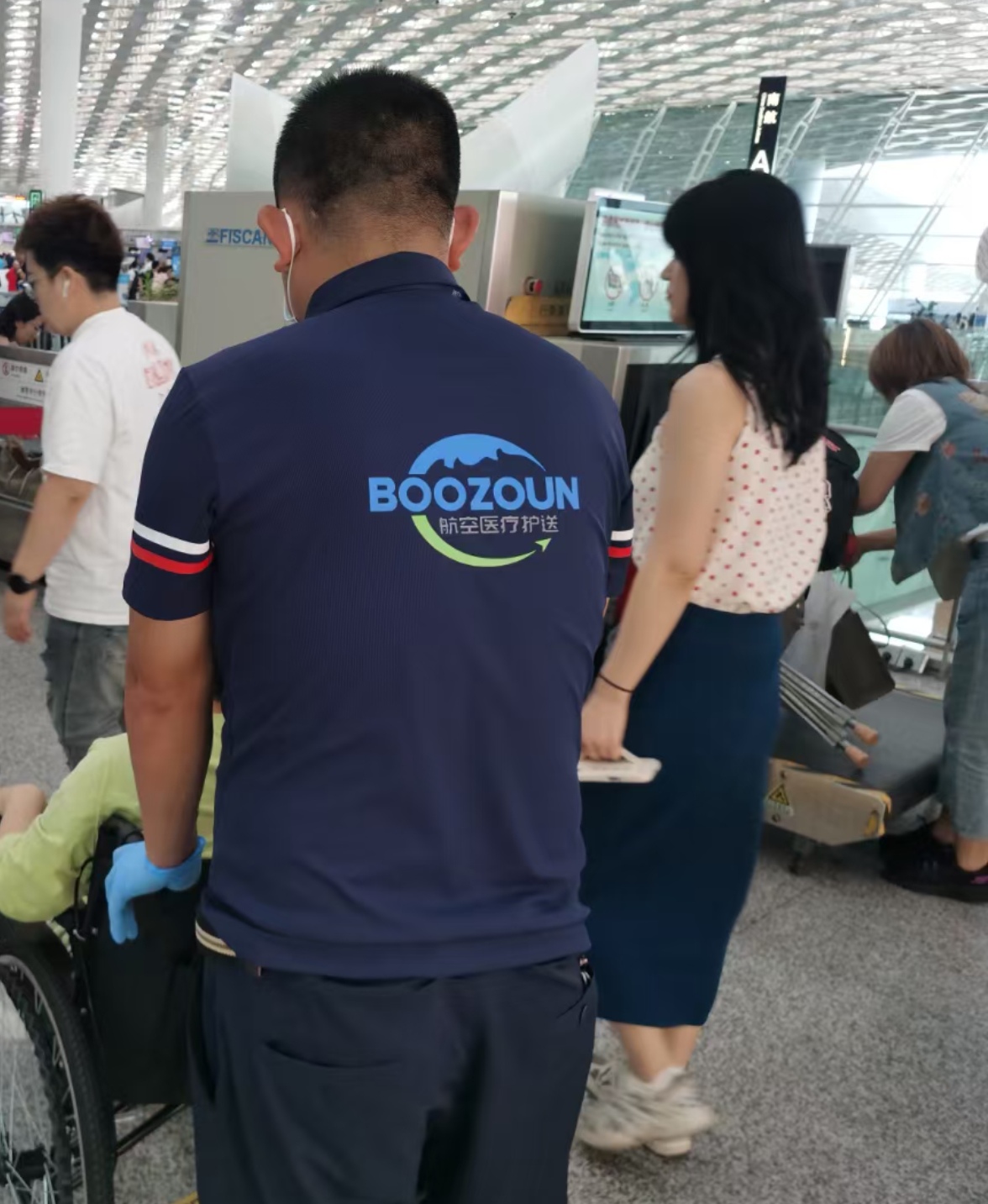
Disclaimer: This is a de-identified coordination service record and does not constitute medical advice. Clinical decisions rest with professional medical institutions; flight operations are carried out by partner air operators, and aircraft and routing are subject to the coordination team's assessment. Patient and family details have been anonymized.
Need aviation medical coordination?
24/7 emergency response · coordination & dispatch
24h Hotline: +86 134 3446 6661