How Many Parties Does One Medical Charter Involve?
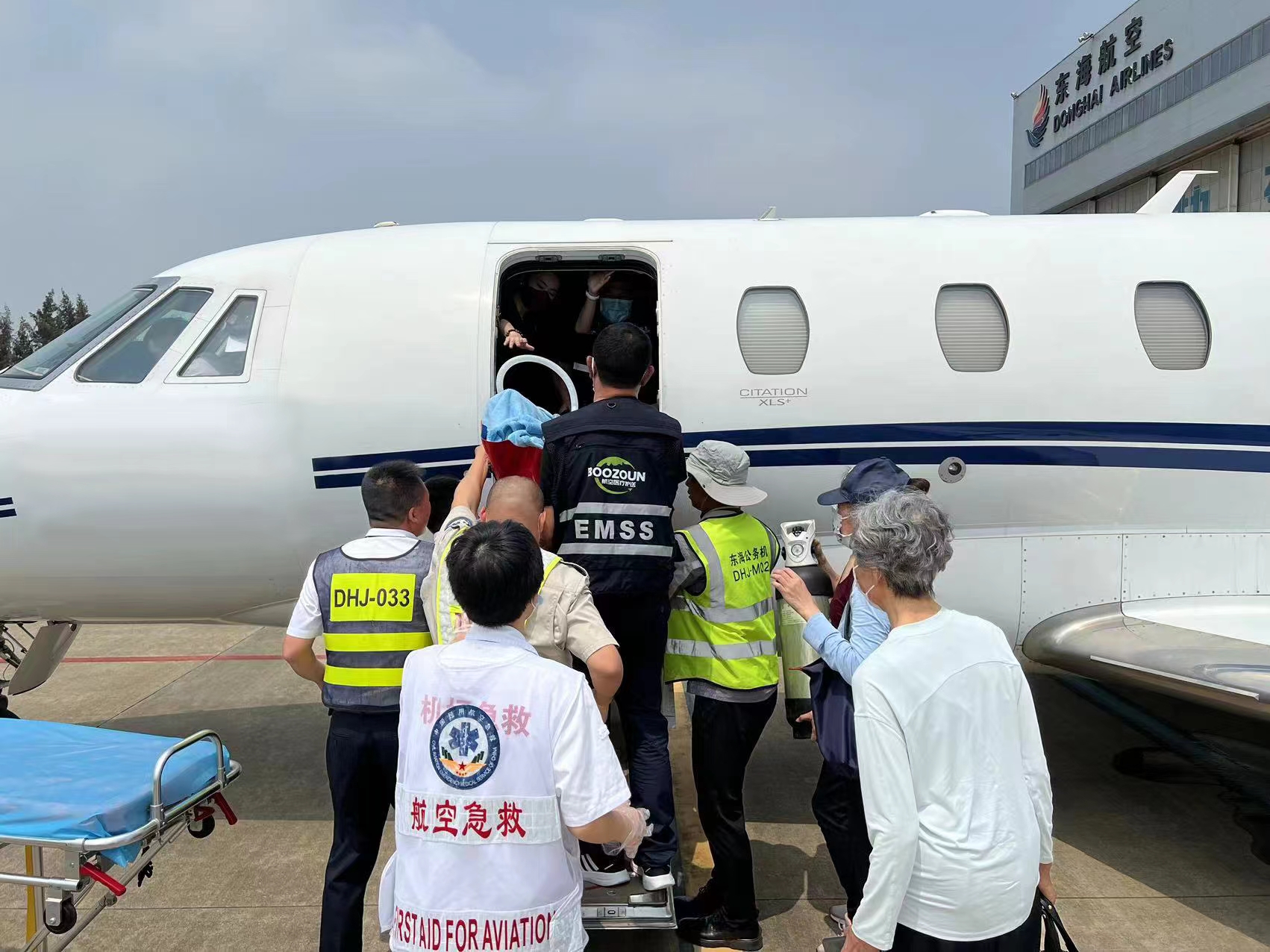
People often assume a medical charter is 'a phone call to book a plane'. The real coordination interface is far more complex. Below is the participant record of one real task.
1. Five roles in one photo
This boarding photo shows at least five participant groups: airport emergency staff in aviation first-aid vests, business-jet ground crew in hi-vis vests, BOOZOUN/EMSS escort coordinators, accompanying medical staff, and the family. Each party's arrival time, working scope and communication channel were scheduled in advance by the coordination team.
2. The parties you cannot see
Off camera are the air operator (flight execution), referring and receiving hospitals (medical handover), ambulance teams at both ends (ground transfer), and the flight approval chain. The coordinator's role is to link these mutually independent parties into one time-locked chain.
3. Why a 'coordination' role is needed
Medics focus on the patient, operators on flight safety, airports on ground procedure, families on time and cost — the goals do not naturally align. The coordination team builds a unified information baseline and decision order, preventing delays caused by parties talking past each other.
BOOZOUN's view:
A charter transfer is essentially a multi-party engineering task. The coordinator replaces no one's expertise — it makes all expertise mesh on the same timeline.
Disclaimer: This is a de-identified coordination service record and does not constitute medical advice. Clinical decisions rest with professional medical institutions; flight operations are carried out by partner air operators, and aircraft and routing are subject to the coordination team's assessment. Patient and family details have been anonymized.
Need aviation medical coordination?
24/7 emergency response · coordination & dispatch
24h Hotline: +86 134 3446 6661